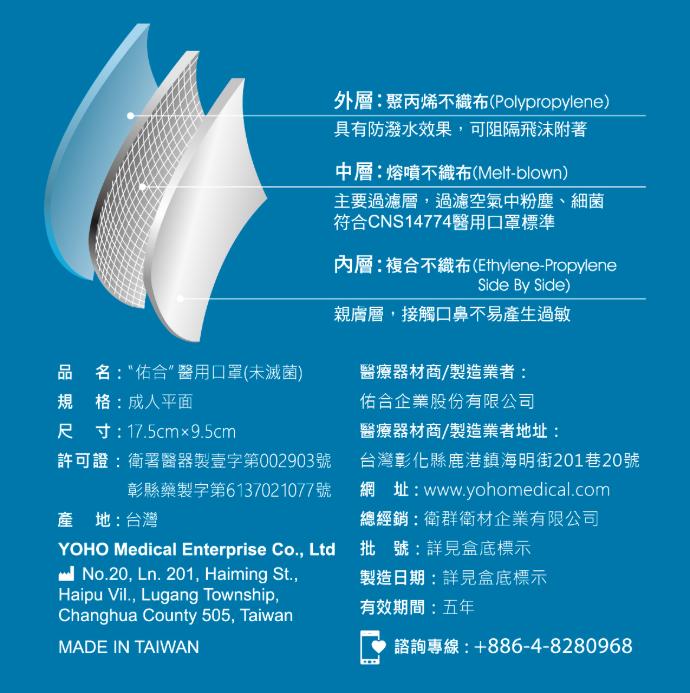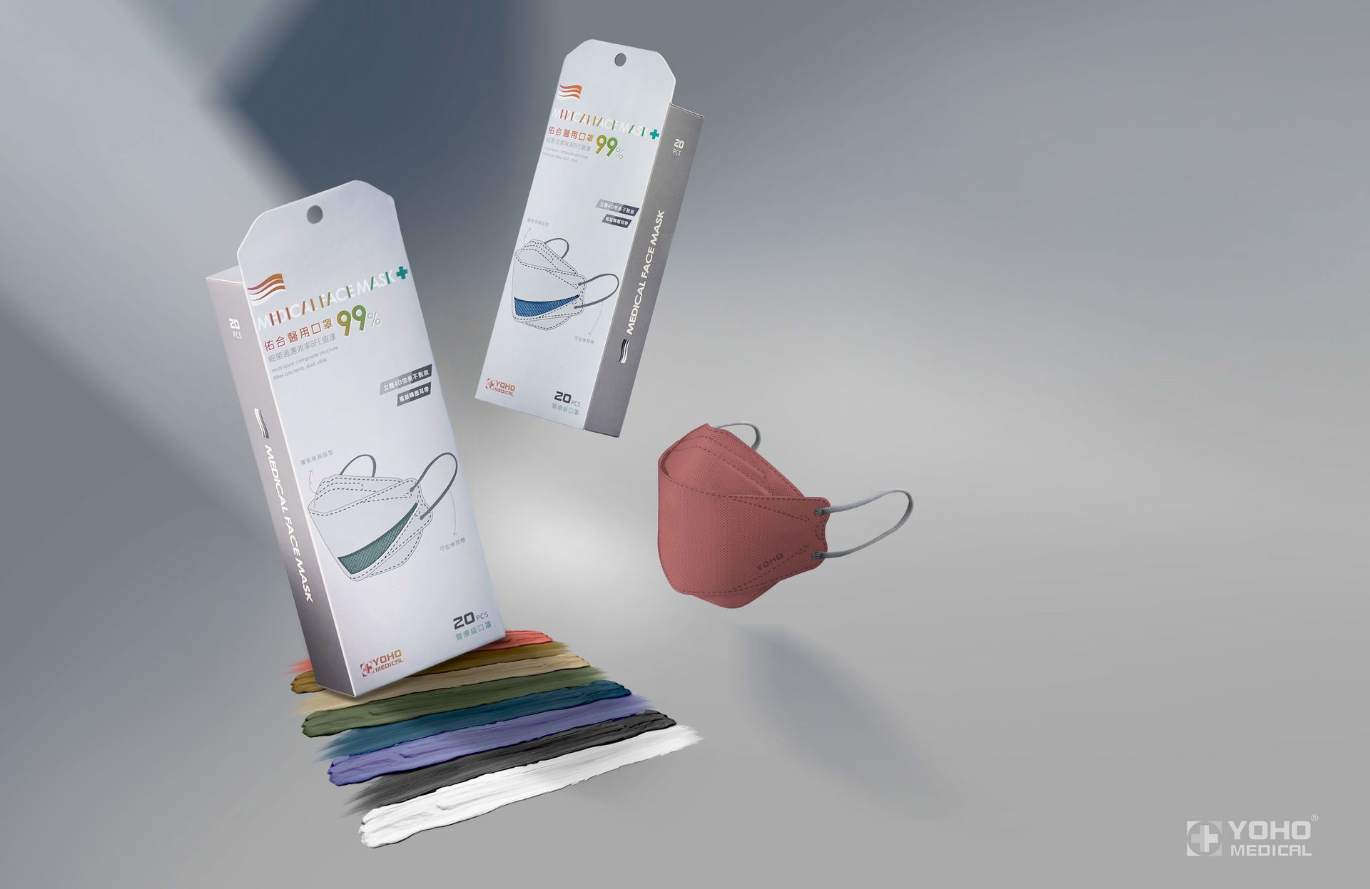
There is an essential difference between medical masks and non-medical masks, mainly in terms of their function, manufacturing standards, regulatory authorities, and labeling.
| Feature | Medical Masks (e.g., Surgical Masks, Medical N95) | Non-Medical Masks (e.g., Cloth Masks, General Activated Carbon Masks, Dust Masks) |
| Purpose & Function | Prevent droplet transmission, block microorganisms and body fluids. Used in medical settings to protect healthcare workers and patients. | Primarily used for warmth, dust protection (larger particles), odor control, aesthetics, or reducing the spread of personal saliva. |
| Regulatory Oversight | Classified as a medical device and subject to regulation by health authorities, including the Taiwan Food and Drug Administration (TFDA). | Considered general consumer goods, regulated by the Bureau of Standards, Metrology and Inspection (BSMI) or general commodity regulations. |
| Manufacturing Standards | Must meet national standards CNS 14774 (medical masks) or higher-level standards (e.g., surgical masks). Produced in cleanroom environments. | Usually no uniform standards, or only comply with general textile safety standards (e.g., CNS 15290). |
| Product Labeling | The medical device must display the permit number, batch number, and manufacturer name, among other information. Domestic flat-type products are required to bear double steel stamps. | Labeling includes general product information such as product name, composition, manufacturer, and origin; medical claims are not allowed. |
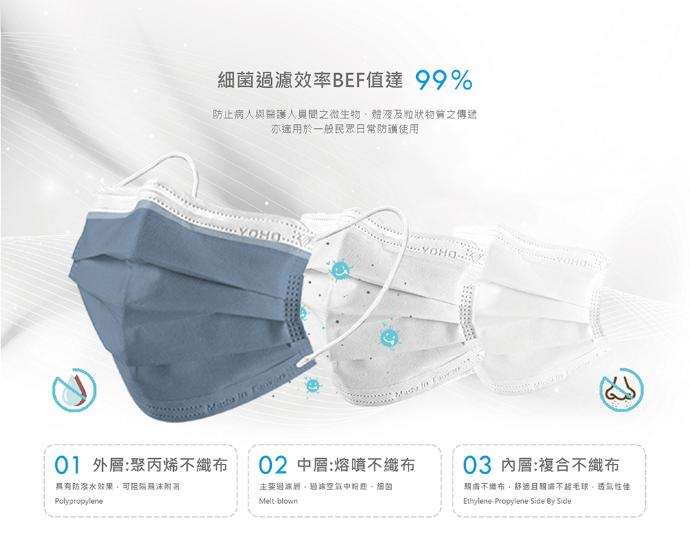
Structure and Protective Principle of Medical Masks
- Outer Layer: Usually made of colored nonwoven fabric treated to be water-resistant, preventing droplets, body fluids, and blood from penetrating.
- Middle Layer: The most critical layer, made of melt-blown nonwoven fabric with electrostatic properties. It effectively filters bacteria (BFE) and particles (PFE), serving as the core layer for blocking viruses, bacteria, pollen, and other allergens.
- Inner Layer: Made of absorbent material that closely contacts the nose and mouth, absorbing moisture and saliva from the wearer to ensure comfort.
How to Identify a Medical Mask
- Check the packaging label:
Ensure it displays a “Medical Device License Number.” - Inspect the mask itself: Domestic flat medical masks must have double embossing (“MD” and “Made in Taiwan” or equivalent country/region marking) on the mask.